

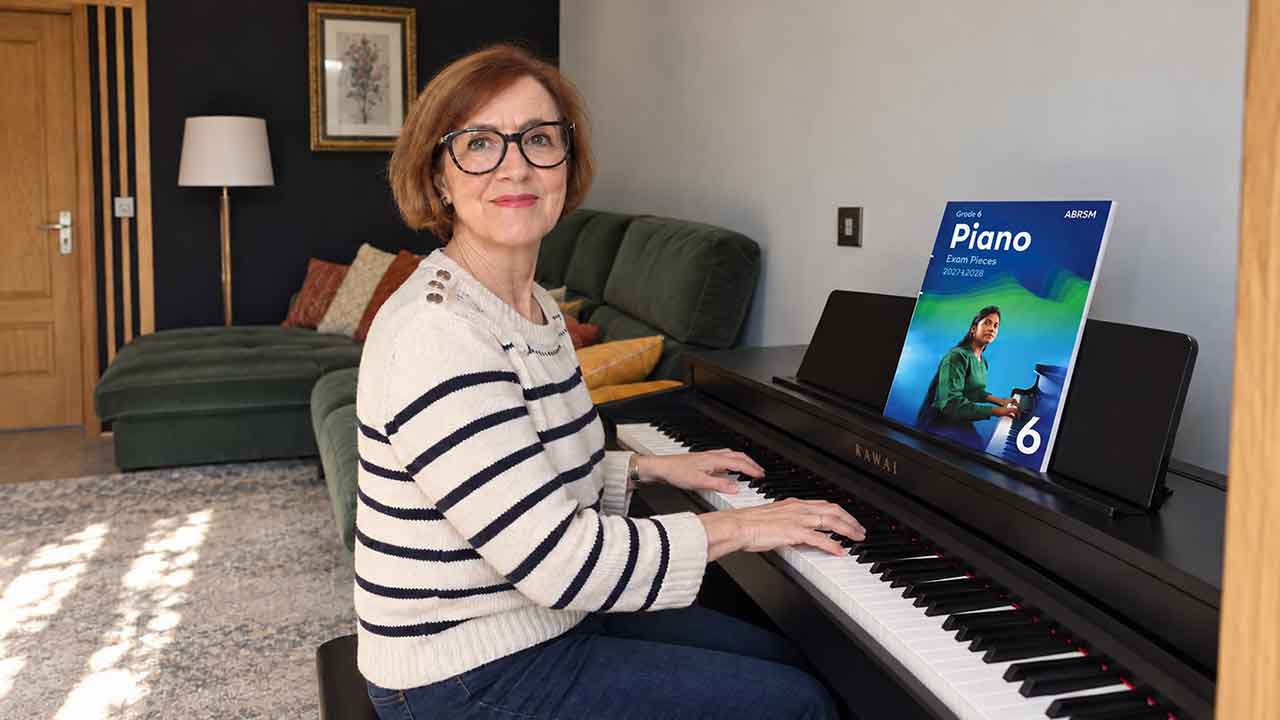
Grade 6 asks for a more sustained musical argument. It is not simply a matter of playing faster or choosing a longer piece: the student needs to maintain control and character over a broader span. The ABRSM Piano Grade 6 book for 2027–2028 includes Mozart, Chopin and Haydn alongside works by Barbara Arens, Chiquinha Gonzaga and Maria Thompson Corley.
This guide looks at the nine selections in the official ABRSM Grade 6 book. They are a starting point for exploring the repertoire, not the complete syllabus list. Use your score alongside the suggestions below, and choose your programme with your teacher.
Choosing music that suits the player
I would look closely at whether a student can keep listening when the playing becomes more demanding. Does the melody remain clear? Can they maintain a comfortable movement rather than tightening as a passage continues? Explore the physical demands and the interpretative possibilities together. A suitable piece offers scope for growth without asking the pupil to force a sound or movement they cannot yet manage.
The nine pieces in the Grade 6 book
Minuet, Op. 23 No. 1 — Ernest Farrar
Think beyond the label of a dance and listen to the individual character of this music. Organise the phrasing and decide how the main ideas relate. Practise changes in texture with particular care so that the pulse remains clear throughout.
Allegro from Sonata in C, K. 545 — Mozart
Familiar music can bring high expectations, so start with the score rather than an idealised speed. Work patiently on evenness, articulation and balance. Let the shape of the movement guide the performance; clean passagework should support the musical conversation.
Polonaise in G minor, KK. IIa No. 1 — Chopin
Establish the dance character before adding expressive freedom. Practise the rhythmic outline and listen to the relationship between melody and accompaniment. Any flexibility should preserve the larger pulse, so the music retains its poise and forward movement.
Summer Moonlight — Barbara Arens
Explore a range of quiet sounds and decide which musical line needs to be heard most clearly. Try a passage with very little pedal while checking the connections. Then make any pedal choices in response to the actual resonance of the instrument.
Vals poético No. 3 — Granados
A waltz can move naturally without being pushed. Find a comfortable underlying pulse and shape the melody above it. Listen to how much freedom the phrase can take before the dance feeling disappears, and use that as a guide in practice.
Adagio in F, Hob. XVII:9 — Haydn
A slower movement needs a sense of direction between its arrival points. Count carefully during early work and plan the phrases over a longer span. Listen for whether expressive detail helps the musical line or repeatedly interrupts it.
Sultana — Chiquinha Gonzaga
Give the rhythmic character time to become familiar before working towards a performance tempo. Practise the accompaniment independently and then check its relationship with the melody. The listener should hear a shared musical pulse, rather than two separately prepared hands.
Spring Sunshine — Maria Thompson Corley
Listen for the shape and contrasts that give the piece its identity. Choose a short passage and experiment with different balances, following the score. Keep the version that makes the musical idea clearest rather than automatically choosing the loudest or fastest.
Reigen, Op. 33 No. 5 — Jensen
Plan the movement of the whole piece and practise the transitions between its ideas. Check the instructions for the required version before settling the performance plan; the official book listing specifies the first repeat. Include that route in complete practice runs.
A practical approach to preparation
Separate technical preparation from performance practice, but connect them regularly. After slow work, test the passage inside a complete phrase. After a full run, choose only a small number of priorities rather than trying to repair everything at once. Plan comfortable starting places throughout the score and practise the ending when fresh, so it receives as much attention as the opening.
Before finalising your programme
Check the current ABRSM piano syllabus and guidance for your exam route, including selection and performance instructions. My introduction to the 2027–2028 syllabus explains the wider changes and the transition from the previous syllabus.
Finding the right next step
A successful Grade 6 programme should show that the student can make musical decisions and sustain them. Security gives expression room to develop; the two belong together.
If you would like help choosing a programme or preparing your pieces, get in touch about piano lessons. We can look at your current playing and decide on a sensible way forward.
Leave A Comment