


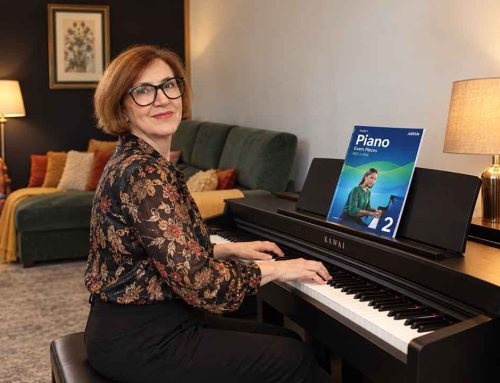
Grade 3 offers more opportunities to make individual musical choices. A student may be drawn to classical phrasing, a familiar song or a piece with a strong rhythmic identity. The ABRSM Piano Grade 3 book for 2027–2028 reflects that variety, moving from Mozart and Burgmüller to Taylor Swift and contemporary piano writing. A varied selection can help the pupil discover more than one side of their playing.
This guide looks at the nine selections in the official ABRSM Grade 3 book. They are a starting point for exploring the repertoire, not the complete syllabus list. Use your score alongside the suggestions below, and choose your programme with your teacher.
Choosing music that suits the player
At this level, I would encourage students to listen beyond the right notes. Can the melody be heard clearly? Does the ending of a phrase sound intentional? Can a repeated idea return with the same control? Those questions help turn technical work into music. Choose pieces that stretch the student in different ways without making every selection a battle against the same weakness.
The nine pieces in the Grade 3 book
Minuet in F, K. 5 — Mozart
Use the dance character to organise the pulse and the phrase. Practise the articulation with care and listen to the spaces between gestures. A tidy performance can still feel dull if every note has the same weight or every phrase the same shape.
Douce Plainte, Op. 100 No. 16 — J. F. F. Burgmüller
The expressive title provides a starting point, but the phrase needs a clear direction. Try singing the line and deciding where it reaches its strongest point. Then see whether the supporting part allows that shape to remain audible.
Song Without Words — Zoe Dixon
Imagine a singer shaping the melody without any text. Where would the breath go, and which notes seem to carry the sentence? Practise that line independently, then rebuild the surrounding texture without losing its sense of continuity.
Optimistic Waltz — Nahre Sol
A waltz needs a feeling of movement through the bar. Try counting quietly while playing and notice whether the music becomes heavy on every beat. Work towards a natural lilt that follows the notation rather than adding exaggerated accents.
Enchanted — Taylor Swift, arranged by Atkins
A familiar melody is a useful doorway into careful musical reading. Compare what is written with what you remember from the song. Shape the arrangement on its own terms, particularly its rhythm, rather than assuming every detail will match the original recording.
Marks on the Tree — Traditional Chinese, arranged by Zuyin
Give the melody time to become familiar before concentrating on speed. Listen to a reference performance, sing a short section and then play it. Notice how the phrase changes when the accompaniment is lighter or when the ending is more carefully shaped.
Flamenco — Gillock
Start by establishing a dependable pulse and clear rhythmic character. Any dramatic effect will be stronger when the basic timing is secure. Try speaking the rhythm of a difficult passage before playing it, then add the printed dynamics without disturbing that foundation.
Kingfisher — Fly
Use the title to spark an idea, then test that idea against what you hear and see in the score. Identify contrasts between sections and practise their transitions. A convincing character depends as much on those connections as on individual attractive moments.
Bluesy Boogie Woogie — Alexandra Skevington
Rhythmic confidence matters more than rushing to an impressive tempo. Isolate the part that provides the pulse and make it dependable before adding the other hand. Listen for whether both hands share the same musical feel when they are combined.
A practical approach to preparation
Try alternating close work with complete phrases. After correcting two awkward bars, put them back into a longer musical sentence so the repair does not become a new stopping point. Keep a short list of reliable starting places throughout each piece. This makes practice more efficient and helps the pupil recover confidently if concentration slips during a performance.
Before finalising your programme
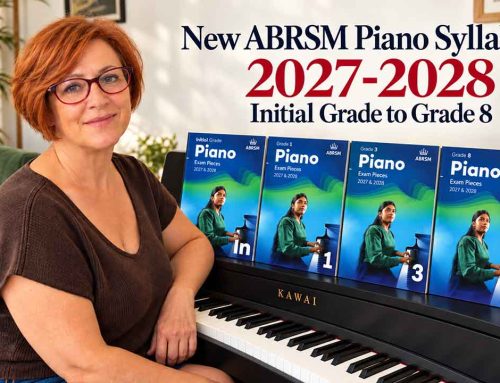
Check the current ABRSM piano syllabus and guidance for your exam route, including selection and performance instructions. My introduction to the 2027–2028 syllabus explains the wider changes and the transition from the previous syllabus.
Finding the right next step
A good Grade 3 performance should sound as though the player knows where the music is going. That confidence grows through listening, sensible choices and patient work on the joins.
If you would like help choosing a programme or preparing your pieces, get in touch about piano lessons. We can look at your current playing and decide on a sensible way forward.

Leave A Comment