

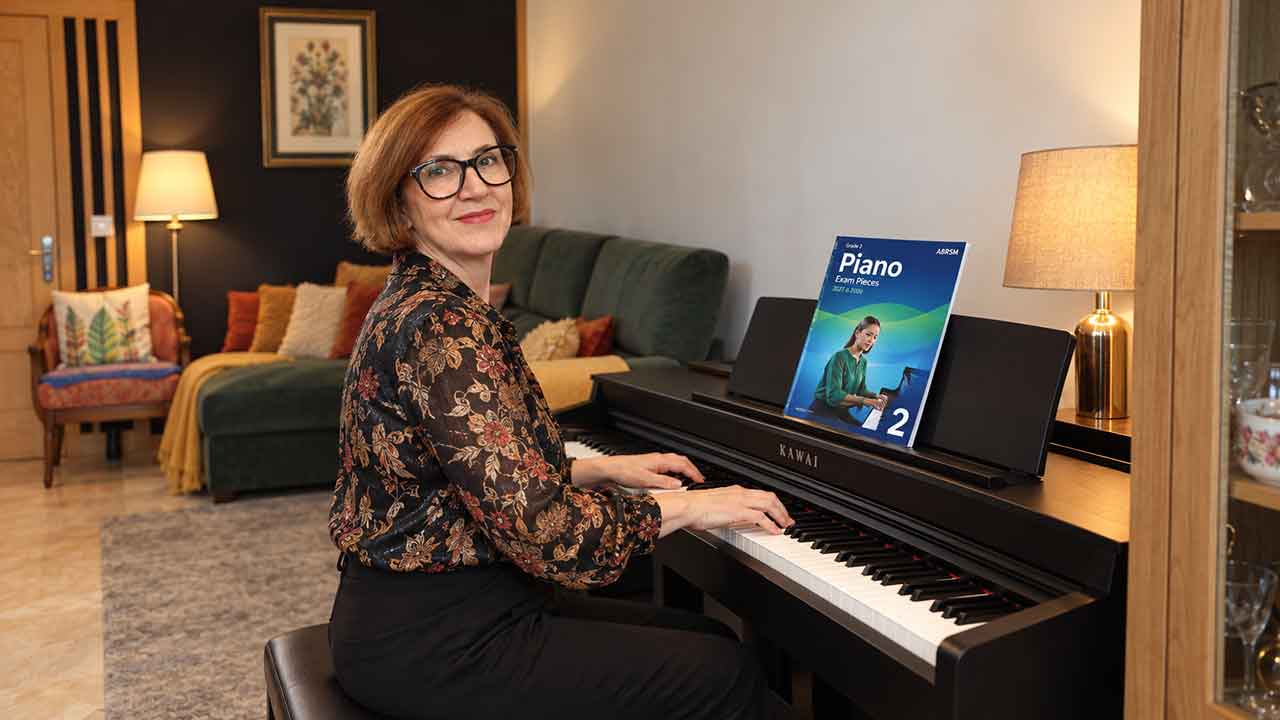
At Grade 2, the question starts to change from ‘Can I play the notes?’ to ‘Can I make the music speak?’ There is still plenty of work to do on reading and coordination, but expression need not wait until everything else is finished. The ABRSM Piano Grade 2 book for 2027–2028 brings together older keyboard music, a lively dance, song-based writing and contemporary character pieces.
This guide looks at the nine selections in the official ABRSM Grade 2 book. They are a starting point for exploring the repertoire, not the complete syllabus list. Use your score alongside the suggestions below, and choose your programme with your teacher.
Choosing music that suits the player
I would look for pieces that help the student develop different kinds of control. A quieter selection can reveal how well they listen to a melody; a livelier one can test whether the pulse stays settled when the hands are busy. Try the less comfortable sections early. The opening alone rarely tells us whether a piece will be a good fit.
The nine pieces in the Grade 2 book
The Queen’s Dolour, Z. 670 — Henry Purcell
Approach this as a chance to make a musical line expressive without relying on a large sound. Listen for where the phrase needs to move and where it can rest. Keep the printed articulation clear, rather than automatically joining everything together.
Minuet No. 2 in G minor — Christian Petzold
The dance title gives a helpful point of reference. Count in groups and notice the shape of each phrase. When repeating material, aim for the same reliable pulse while keeping the musical conversation alive through the written detail.
Tarantella — Pam Wedgwood
Begin with a tempo at which the rhythm feels easy to organise. Practise short groups accurately and join them without a break in the pulse. Let any increase in speed grow from that security rather than from excitement about the dance.
Preludias from Mažoji siuita — Balys Dvarionas
A useful first task is to identify the main musical line and listen to it on its own. When the hands come together, check that the accompanying material supports it. Recording a short passage can reveal balance more clearly than concentrating on finger movements.
My Heart (it longs for you) — Kathleen Feenstra
Let the title prompt a discussion about expression, then look for evidence in the score. Where does the phrase build, and how does it finish? Plan those changes before adding any extra freedom of timing, so the music retains its shape.
Takeda Lullaby — Traditional Japanese
Begin by listening to the melody as a complete line. Singing or humming can help establish its shape before both hands are involved. Aim for a gentle sound that remains clear, and resist slowing down simply because a passage is quiet.
Sneaky Surprise — Sebastian Ooi
Character pieces invite imaginative playing, but the details on the page still lead the way. Mark the contrasts that catch your ear and practise moving between them. A surprise is more effective when the surrounding music has a steady, convincing pulse.
Circling Gulls — Joan Mary Last
Use a picture of the title as an imaginative prompt, without letting it dictate every musical decision. Try playing a phrase in one continuous gesture. Listen for interruptions caused by awkward movement and work on those joins separately.
Park Daze — Nikki Yeoh
Listen first for the overall musical feel, then isolate any rhythm that does not yet seem natural. Clap or tap it while counting, and only then return it to the keyboard. Keep the same sense of pulse when the texture changes.
A practical approach to preparation
Build a practice session around three jobs: reading a new passage, improving a familiar passage and playing something through. They require different kinds of concentration. When polishing, name the aim before starting: a quieter accompaniment, a clearer ending or a more dependable rhythm. A short recording at the end of the week gives the pupil something concrete to compare with the previous attempt.
Before finalising your programme
Check the current ABRSM piano syllabus and guidance for your exam route, including selection and performance instructions. My introduction to the 2027–2028 syllabus explains the wider changes and the transition from the previous syllabus.
Finding the right next step
Grade 2 can be a lovely stage for developing musical independence. Encourage the student to explain what they want the listener to hear, and then help them find a practical way to achieve it.
If you would like help choosing a programme or preparing your pieces, get in touch about piano lessons. We can look at your current playing and decide on a sensible way forward.
Leave A Comment