

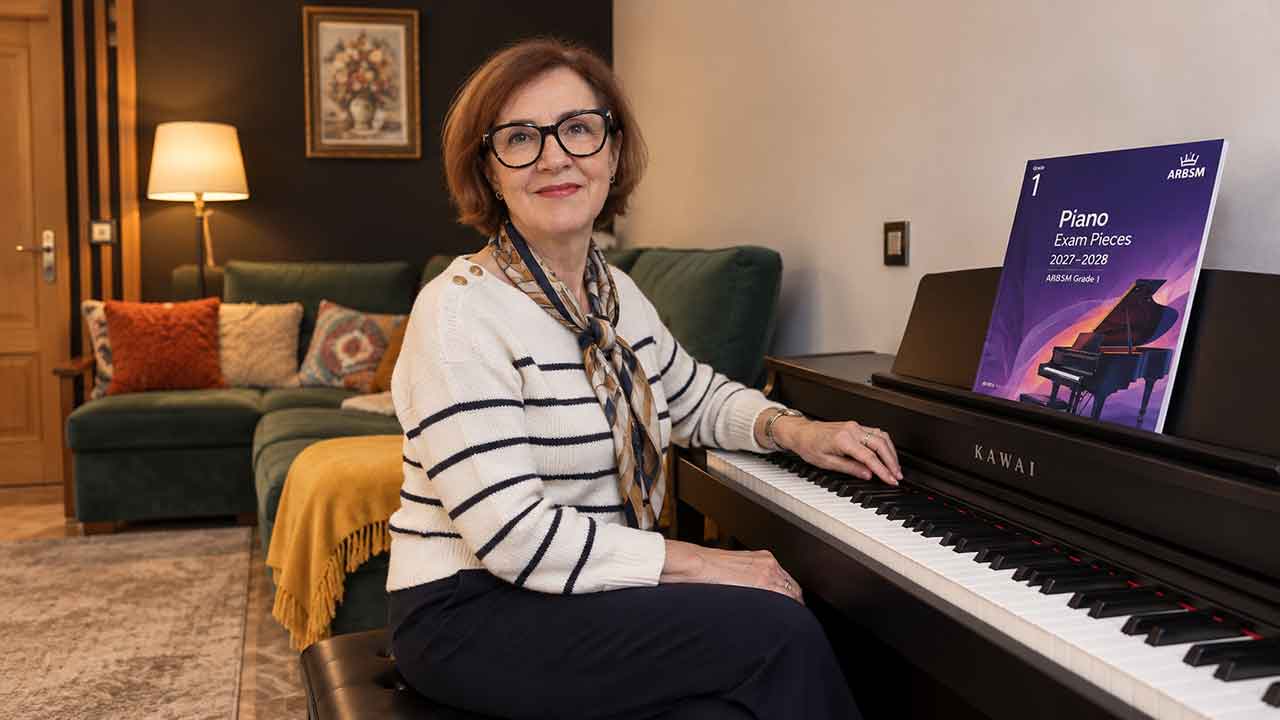
Grade 1 is an exciting step. A student is beginning to turn notes and rhythms into a performance with a recognisable character, and the choice of music can make a real difference to their confidence. The ABRSM Piano Grade 1 book for 2027–2028 offers a mixture of classical music, familiar songs and contemporary pieces. There is room here for different personalities: the thoughtful player, the budding storyteller and the pupil who loves a lively musical idea.
This guide looks at the nine selections in the official ABRSM Grade 1 book. They are a starting point for exploring the repertoire, not the complete syllabus list. Use your score alongside the suggestions below, and choose your programme with your teacher.
Choosing music that suits the player
At this stage, I would put a comfortable pulse and an attractive sound ahead of speed. A piece should leave enough room for a student to listen to what they are doing. If every note is a struggle, there is little attention left for phrasing or expression. Try a short section of several pieces before deciding; enjoying a recording and enjoying playing the music are not always the same thing.
The nine pieces in the Grade 1 book
Frosty Morning — Swinstead, arranged by Hall
Use the title as a starting point for imagination. What sort of sound might suggest a frosty morning? Try two contrasting ways of playing a short phrase, then choose the one that best fits the printed dynamics and the musical line.
Andante from Symphony No. 94, “The Surprise” — Haydn, arranged by Bullard
Listening to the orchestral movement can help a beginner hear that a piano arrangement belongs to a larger musical world. Bring that sense of a clear musical sentence to the keyboard, with a steady pace and an ending that feels deliberate.
German Dance in C, WoO 8 — Beethoven
A dance needs movement, even when practised slowly. Count the beats aloud, then feel how they belong together. Avoid treating every note as equally heavy; the aim is a phrase that moves naturally rather than a row of separate sounds.
Lullaby — Dyson
A lullaby is a useful invitation to listen carefully to tone. Practise making a gentle sound without losing clarity, and sing the melody before playing it. Soft playing still needs a secure rhythm and a clear direction through each phrase.
What Was I Made For? — Billie Eilish and Finneas O’Connell, arranged by Atkins
Knowing a song can be motivating, but it can also tempt a pupil to play from memory of the recording rather than from the page. Read this arrangement carefully, keeping its written rhythm while allowing the melody to sound like a sung line.
My bonnie lies over the ocean — Traditional Scottish, arranged by Litten
Try singing the tune before sitting at the piano. Notice where a singer would breathe and use those points to understand the phrases. Familiarity is helpful, provided it does not replace careful attention to the arrangement and its details.
The Voyager — Santosh Baynes
Before deciding on a story for this piece, listen and look for musical clues. Where does the phrase seem to travel, and where does it settle? A simple description of each section can help a young player remember its direction.
Monkey Mischief — Tamara Niekludow
The title offers plenty of scope for character. A useful practice game is to make the expression playful while keeping the pulse dependable. Exaggerate the printed contrasts at a comfortable tempo first; character does not have to depend on playing quickly.
Roo’s Blues — Nikki Iles
Listen to the reference performance to get acquainted with the style, then return to the notation. Practise the rhythm away from the keyboard before adding the notes. The goal is a confident musical feel, rather than a hurried imitation of a recording.
A practical approach to preparation
Keep practice small and specific. Choose one phrase, decide what needs improving, and play it again with that single aim in mind. Then connect it to the next phrase. Include an occasional uninterrupted performance for a parent or friend, so that carrying on after a small slip becomes familiar. For younger pupils, a few attentive minutes are often more useful than a long session of repetition without listening.
Before finalising your programme
Check the current ABRSM piano syllabus and guidance for your exam route, including selection and performance instructions. My introduction to the 2027–2028 syllabus explains the wider changes and the transition from the previous syllabus.
Finding the right next step
The best Grade 1 programme is one the pupil can understand, enjoy and communicate. It should offer a manageable challenge and a reason to return to the piano tomorrow.
If you would like help choosing a programme or preparing your pieces, get in touch about piano lessons. We can look at your current playing and decide on a sensible way forward.
Leave A Comment