

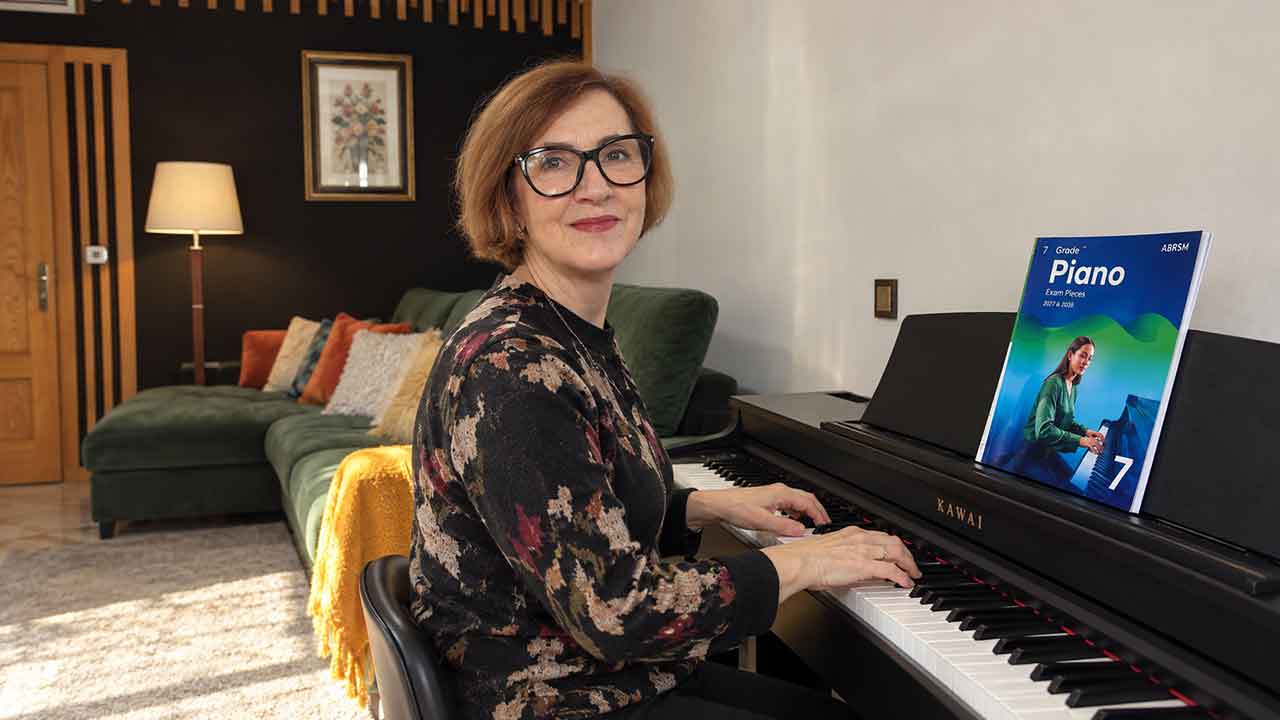
By Grade 7, an individual musical voice is becoming increasingly important. The player needs to make contrasts convincing while keeping a sense of the whole performance. The ABRSM Piano Grade 7 book for 2027–2028 offers a particularly varied selection, including Handel, Mendelssohn and Clara Schumann alongside contemporary pieces by Kathleen Feenstra, Federico Ruiz and Christopher Norton.
This guide looks at the nine selections in the official ABRSM Grade 7 book. They are a starting point for exploring the repertoire, not the complete syllabus list. Use your score alongside the suggestions below, and choose your programme with your teacher.
Choosing music that suits the player
I would consider the programme as a whole from the beginning. Do the selections give the pupil opportunities to show different colours and styles? Are the main difficulties varied, or do all the pieces place the same strain on their technique? A balanced choice should leave room for detailed musical work. It should also be music the player will want to live with for several months.
The nine pieces in the Grade 7 book
Christmas Piece in F, Op. 72 No. 6 — Mendelssohn
Look for the musical structure beneath the surface activity. Decide which ideas should be prominent and which should support them. Practise the transitions at a comfortable tempo, keeping the same clarity of intention when the full texture is restored.
Passecaille from Suite No. 7 in G minor, HWV 432 — Handel
Think about how the music develops across successive sections. Give each a clear purpose while keeping the whole connected. Practise the handover from one idea to another, and listen for whether the pulse survives changes in texture and intensity.
Allegro from Lesson I — E. Turner
Start by identifying the main gestures and their relationships. Aim for articulate, purposeful phrases rather than a stream of evenly weighted notes. A slower recording can be revealing: the musical structure should remain audible even before the final tempo is reached.
Prelude in D minor — M. K. Čiurlionis
Map the points of arrival before concentrating on local detail. Try describing the direction of a whole phrase, then choose the balance and dynamic shape that make it clear. Expressive intensity is more convincing when it has somewhere to go.
Adagio from Sonata in G minor — Clara Schumann
Sustain the melodic line through the quieter moments as well as the climaxes. Work on the supporting parts independently, then place them around the melody. Avoid assuming that expressive playing means constant slowing; continuity is part of the emotional effect.
If I told you I loved you — Kathleen Feenstra
The title suggests a personal statement, but a performance needs a clear musical shape as well as a mood. Plan the larger phrases and listen to their endings. Use a recording to check whether the line remains connected across changes in texture.
Småtroll, Op. 71 No. 3 — Grieg
Let accuracy and physical ease set the pace of preparation. Work in short sections and check that the movement remains comfortable as the music becomes more secure. Character should be present in slow practice, rather than being postponed until a faster performance.
Tu presencia — Federico Ruiz
Listen carefully to the reference performance and identify the rhythmic details that give the piece its character. Practise those separately from the notes where useful. When the hands return together, check that the phrasing and pulse feel like one musical idea.
Wildcat — Christopher Norton
The rock-prelude context makes rhythmic conviction a useful focus. Establish a dependable beat and practise the written accents and contrasts without rushing. Aim for energy that stays controlled through the whole piece, including transitions and the final gesture.
A practical approach to preparation
Practise the programme in different orders so that every piece receives fresh attention. Build in complete runs, but avoid making every session a mock exam. A run should produce useful information: where concentration weakened, where balance changed and which transitions felt uncertain. Use those observations to plan the next focused session, then test the improvement in context.
Before finalising your programme
Check the current ABRSM piano syllabus and guidance for your exam route, including selection and performance instructions. My introduction to the 2027–2028 syllabus explains the wider changes and the transition from the previous syllabus.
Finding the right next step
Grade 7 is a chance to develop a performance that feels considered and personal. The most persuasive playing combines reliable preparation with a clear idea of what each piece has to say.
If you would like help choosing a programme or preparing your pieces, get in touch about piano lessons. We can look at your current playing and decide on a sensible way forward.
Leave A Comment