

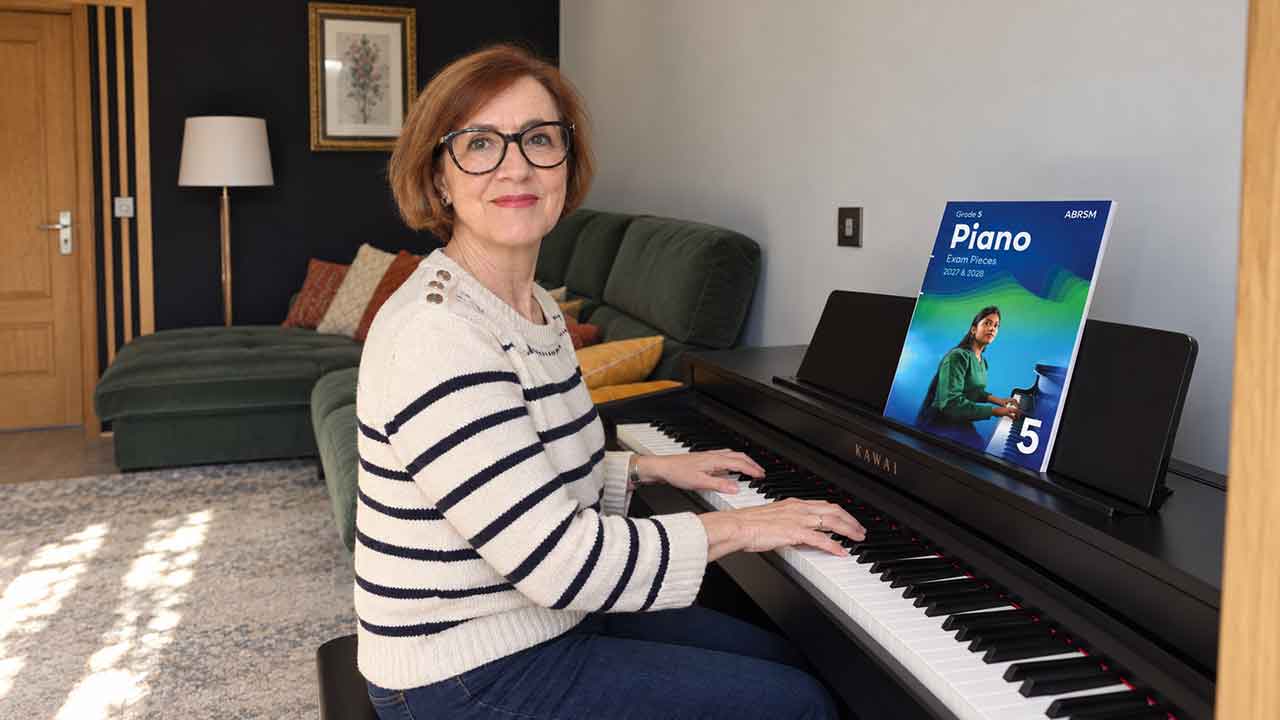
Grade 5 can feel like an important milestone, but it is also a chance to enjoy a wider musical range. The ABRSM Piano Grade 5 book for 2027–2028 includes classical dance and sonatina movements, expressive piano writing, musical theatre and blues. Choosing well means considering the whole player: their coordination, listening, confidence and willingness to explore something unfamiliar.
This guide looks at the nine selections in the official ABRSM Grade 5 book. They are a starting point for exploring the repertoire, not the complete syllabus list. Use your score alongside the suggestions below, and choose your programme with your teacher.
Choosing music that suits the player
I would avoid building a programme around the piece that sounds most impressive on a first hearing. Try the passages that may take longest to settle and consider how they fit alongside the other choices. A useful programme should offer contrast while leaving enough time to develop sound and expression, rather than spending the entire preparation period simply getting through the notes.
The nine pieces in the Grade 5 book
Minuet and Trio in B flat, D. 41 No. 10 — Schubert
Think about the relationship between the minuet and trio as well as the shape of each phrase. Explore what changes in character and what remains connected. A convincing return should feel like part of a larger design, rather than a restart.
Fossiles from Le carnaval des animaux — Saint-Saëns, arranged by Litten
Listening to the original orchestral piece can provide a useful sense of its theatrical character. Then return to the piano arrangement and work on clarity. Keep the rhythm organised so that any humour comes through deliberately, rather than through accidental unevenness.
Rondo from Sonatina in F, Op. 168 No. 1 — Diabelli
Map the returning material and the contrasting episodes before detailed practice. This helps the student understand how the movement holds together. Work on the entries into familiar material as carefully as the opening, maintaining a consistent sense of tempo.
Étude in C, Op. 50 No. 1 — Louise Farrenc
Treat the study as music from the start. Identify the technical task, but also decide which part should lead the listener through the texture. Short, comfortable repetitions are useful only if they improve the sound as well as the accuracy.
Ombrelle versicolore — Danielle Fournier
Use an initial listening session to notice the overall shape and changes of colour. At the keyboard, experiment with balance before increasing volume. Ask whether each expressive change has a destination, so that the interpretation remains connected rather than merely decorative.
Absence — Florence Price
Start with the direction of the melodic line and the way phrases end. A restrained passage still needs movement and intention. Practise the melody separately, then add its surroundings while checking that the important line remains clear to the listener.
Popular from Wicked — Stephen Schwartz, arranged by Atkins
The stage origin offers a lively point of reference. Read the arrangement closely, especially when the remembered song suggests a different rhythm. Try to communicate its character through secure timing and carefully chosen emphasis, rather than through extra speed.
Blues for Lydia — Mike Cornick
Listen for the style, then make the written rhythms dependable at a manageable tempo. Practise the supporting part until it feels settled and add the melody without losing that foundation. A relaxed impression should grow from control, not from approximate timing.
The Witch — Jakub Metelka
Plan how the character develops across the piece, including the ending. Contrasts need preparation, so isolate the moments where the musical idea changes. Check the current exam directions carefully: the official book listing specifically includes the first repeat for this selection.
A practical approach to preparation
Use a weekly recording to choose the next practice priorities. Listen once for continuity, once for balance and once for detail. That is more productive than repeatedly recording in search of a flawless take. Keep developing reading and musicianship alongside the selected pieces, and discuss future study plans early so that the next stage does not become a rush after the exam.
Before finalising your programme
Check the current ABRSM piano syllabus and guidance for your exam route, including selection and performance instructions. My introduction to the 2027–2028 syllabus explains the wider changes and the transition from the previous syllabus.
Finding the right next step
Grade 5 is a good point to notice how much independence a student has gained. The most satisfying result is a player who can recognise a musical problem, choose a useful practice method and hear the improvement.
If you would like help choosing a programme or preparing your pieces, get in touch about piano lessons. We can look at your current playing and decide on a sensible way forward.

Leave A Comment