

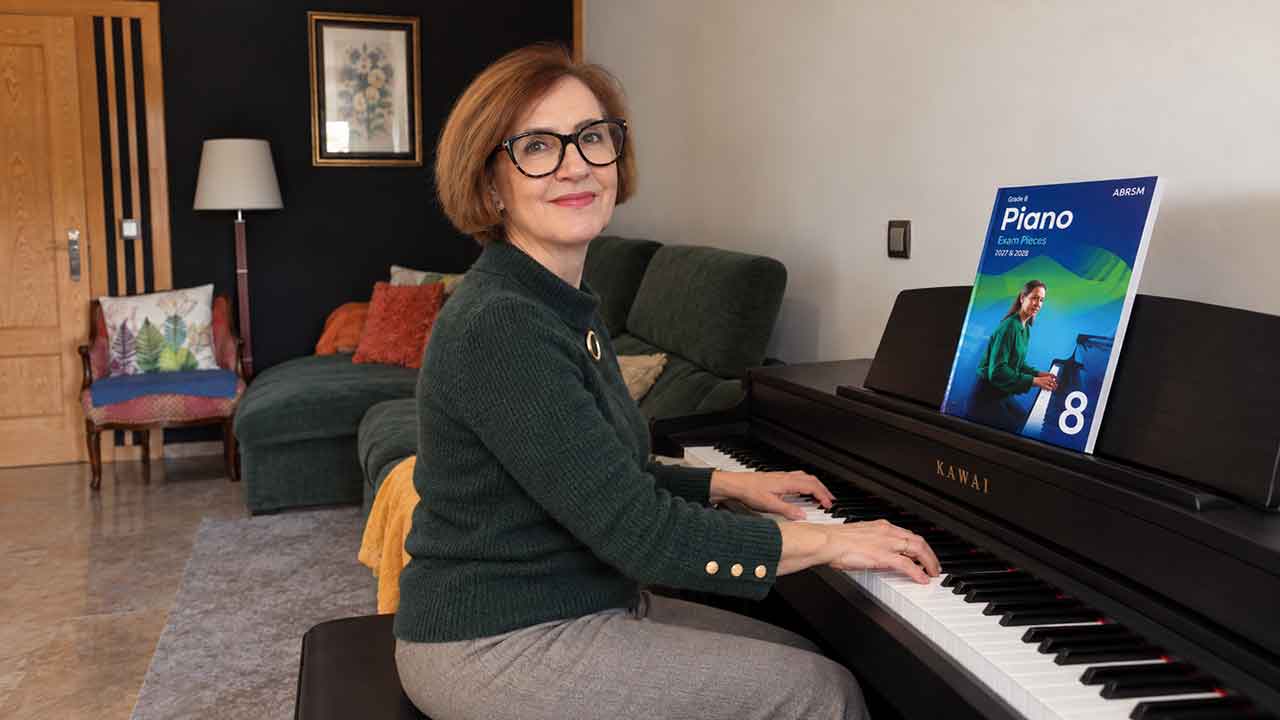
Grade 8 is a significant achievement, but the aim is more than reaching the end of a demanding programme. It is an opportunity to play with independence, stylistic understanding and a clear sense of communication. The ABRSM Piano Grade 8 book for 2027–2028 brings together Bach, Beethoven and Ravel, lyrical works by Bridge and Chopin, and contrasting contemporary selections.
This guide looks at the nine selections in the official ABRSM Grade 8 book. They are a starting point for exploring the repertoire, not the complete syllabus list. Use your score alongside the suggestions below, and choose your programme with your teacher.
Choosing music that suits the player
I would begin with suitability rather than prestige. A famous title is not automatically the right choice, and a quieter piece is not necessarily less demanding. Consider stamina, clarity, sound and the ability to sustain a musical line. Try representative passages before committing, and leave enough preparation time for interpretation to mature after the notes are broadly secure.
The nine pieces in the Grade 8 book
Allegro from Italian Concerto, BWV 971 — J. S. Bach
Think about contrast and the interaction of musical lines across the movement. Practise individual parts so their direction is clear, then listen to how they combine. Energy should come from a secure pulse and purposeful articulation rather than relentless volume.
Rondo from Sonata in C minor, Op. 13, “Pathétique” — Beethoven
Map the returns of the principal idea and the contrasting episodes. Each return belongs to a larger journey, so practise its approach as well as the theme itself. Keep a sense of direction through transitions instead of saving all the attention for familiar passages.
Fugue from Le tombeau de Couperin — Ravel
Work patiently on the independence and balance of the musical lines. Play and listen to them in different combinations before restoring the whole texture. Clarity depends on knowing what matters at each moment, rather than trying to make every part equally prominent.
Rosemary, H. 68 No. 2 — Frank Bridge
Begin with the long melodic line and the changing relationship between foreground and background. Explore tone at a moderate dynamic before aiming for greater intensity. Let any pedal support the harmony and phrase, checking carefully for clarity on the instrument you use.
Nocturne in E minor, Op. 72 No. 1 — Chopin
Singing tone needs a dependable foundation. Practise the accompaniment quietly and evenly, then add the melody with a clear phrase plan. Explore expressive flexibility without allowing it to dissolve the underlying movement or turn every local detail into a separate event.
Offering of Intimacy, Op. 4 No. 1 — Jian’er An
Approach unfamiliar music with curiosity rather than an immediate fixed interpretation. Listen, read and identify its principal ideas. Try several balances and phrase shapes, then keep the choices that make the structure and expressive direction clearest.
Waltz Caprice — Iris de Cairos-Rego
Consider how the dance element and the freedom suggested by the title can work together. Establish the pulse before experimenting with expressive flexibility. Keep checking that technical work supports the character and does not leave the phrases sounding mechanical.
Footprints in the Sand — Alexis Ffrench
Focus on continuity, tone and the shape of the complete piece. Repeated or familiar material still needs attentive listening. Record a run and ask whether the music develops naturally, rather than relying on a general atmosphere from beginning to end.
Winterley — Gwilym Simcock
Give yourself time to become comfortable with the musical language. Isolate rhythms and textures that need work, then reconnect them to the larger phrase. Listen for a convincing overall shape, not only the successful negotiation of individual difficult passages.
A practical approach to preparation
Prepare for the physical and mental length of the programme gradually. Practise recovery as well as accuracy: choose a starting point in the middle of a piece and continue with a clear musical intention. Record occasional complete runs and listen the following day. That distance can make it easier to judge pacing, balance and whether the final piece receives the same attention as the first.
Before finalising your programme
Check the current ABRSM piano syllabus and guidance for your exam route, including selection and performance instructions. My introduction to the 2027–2028 syllabus explains the wider changes and the transition from the previous syllabus.
Finding the right next step
Grade 8 should be a platform for further music-making. A thoughtful programme can reveal how far a student has come while opening the door to repertoire they will enjoy exploring long after the examination.
If you would like help choosing a programme or preparing your pieces, get in touch about piano lessons. We can look at your current playing and decide on a sensible way forward.


Leave A Comment